Monkeys Outside My Window
Updated: Feb 18
By Shraddha Gupta
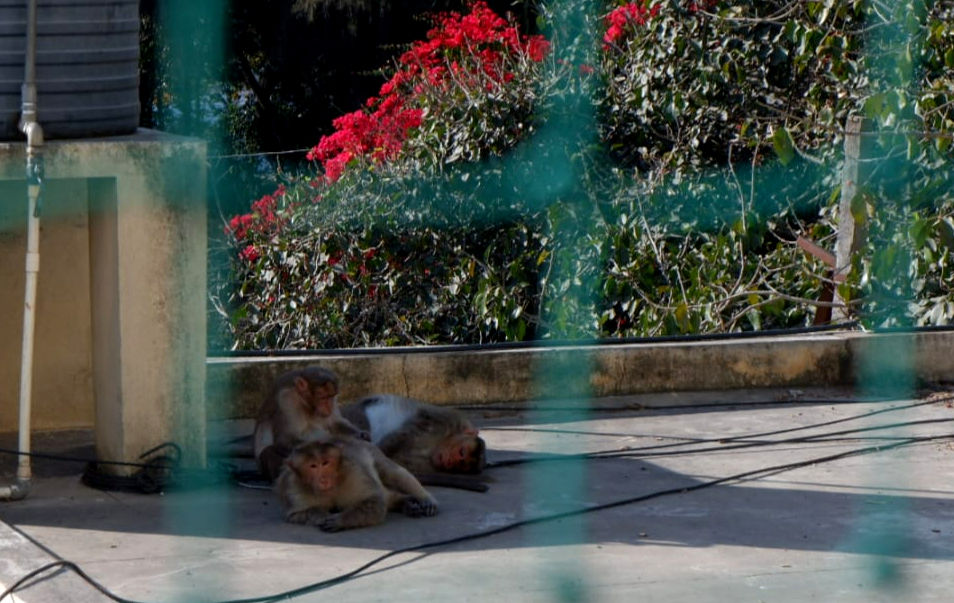
One morning, far earlier than I intended to wake up, a harsh screeching sound dragged me out of sleep. It wasn’t traffic, nor construction. When I stepped to the window, squinting into the pale light, I saw two baby monkeys on the terrace opposite mine, gleefully sliding a steel plate back and forth across the rough cement floor. The metal scraped loudly, echoing in the stillness of the morning, as if they had discovered a new toy. That terrace, I realized, is one of their regular hangout spots throughout the day. Soon, more of them gathered long tails curling over ledges, nimble hands exploring railings and it became clear that this was not an accidental visit. A whole troop had quietly folded this slice of concrete into their daily terrain.
In Hulimavu and Bannerghatta localities, this is no isolated sight. Residents increasingly share tales of monkeys raiding balconies, stealing food packets, snatching phones, or even barging into homes in search of calories. In Begur, for instance, a group of over ten macaques was reported to have camped inside an apartment complex, ripping through flats and terrifying children; phones were taken, plates were sniffed out like treasure, and panic quickly spread among residents waiting for forest department action.
Walk down any residential street, and these stories are easy to find, neighbors discuss the latest monkey sightings like weather updates, and sometimes the online forum chatter veers into existential musings: Is this really a monkey problem, or a human problem?
To see these animals as mere nuisances misses the bigger picture of urban ecology and ecological displacement. The monkeys we now wake to were once inhabitants of mesmeric green spaces; thick tree canopies, fruiting branches, and wild corridors that stretched uninterrupted until creeping urbanization whittled them down. Bannerghatta National Park and Biological Park remain important refuges, but beyond the protected underbrush lies a mosaic of roads, layouts, construction sites, and cleared land, shrinking the natural habitat where macaques and other wildlife foraged and lived.
When nature’s grocery shelves are razed for malls and metro lines, wildlife does not simply vanish. It adapts. Monkeys, especially bonnet macaques around Bengaluru, have learned to associate human settlements with easy food - garbage bins, fruit trees in gardens, offerings at temples, and even meals fed by well-meaning citizens. They bypass forests and move straight into a world of concrete and balconies precisely because the forests are fractured, the trees chopped, and the natural food sources disappearing.
This isn’t an invitation to romanticize every monkey’s presence; tension arises when monkeys and humans live cheek by jowl. Children get scared, people lose belongings, and there are genuine safety concerns. Yet it’s equally important to ask: who forced this animal out of its home? Are the monkeys the invaders, or are we the ones who (literally) built over their home?
Urban ecology isn’t just about neat green patches in parks; it’s about relationships, between species, between human and non-human domains, and between policy and daily life. A focus simply on “monkey nuisance” obscures how Bangalore’s development decisions, fragmented forests, and lack of wildlife corridors pushed these creatures into city streets in the first place.
From my window, as a young macaque leaps from an electric pole to the next balcony railing, it’s clear: this city wasn’t built around nature; it was built over it. And now, the question we have to ask is not just how to keep monkeys out of our apartments, but how to create space in our cities that acknowledges the animals we displaced. Because if we fail to see them as displaced neighbors, we will only ever treat ecology as a nuisance to be managed, rather than a coexistence to be nurtured.


Comments