Selling Survival in the Silicon City: Street Vendors in Bangalore
By Kavya and Akshara
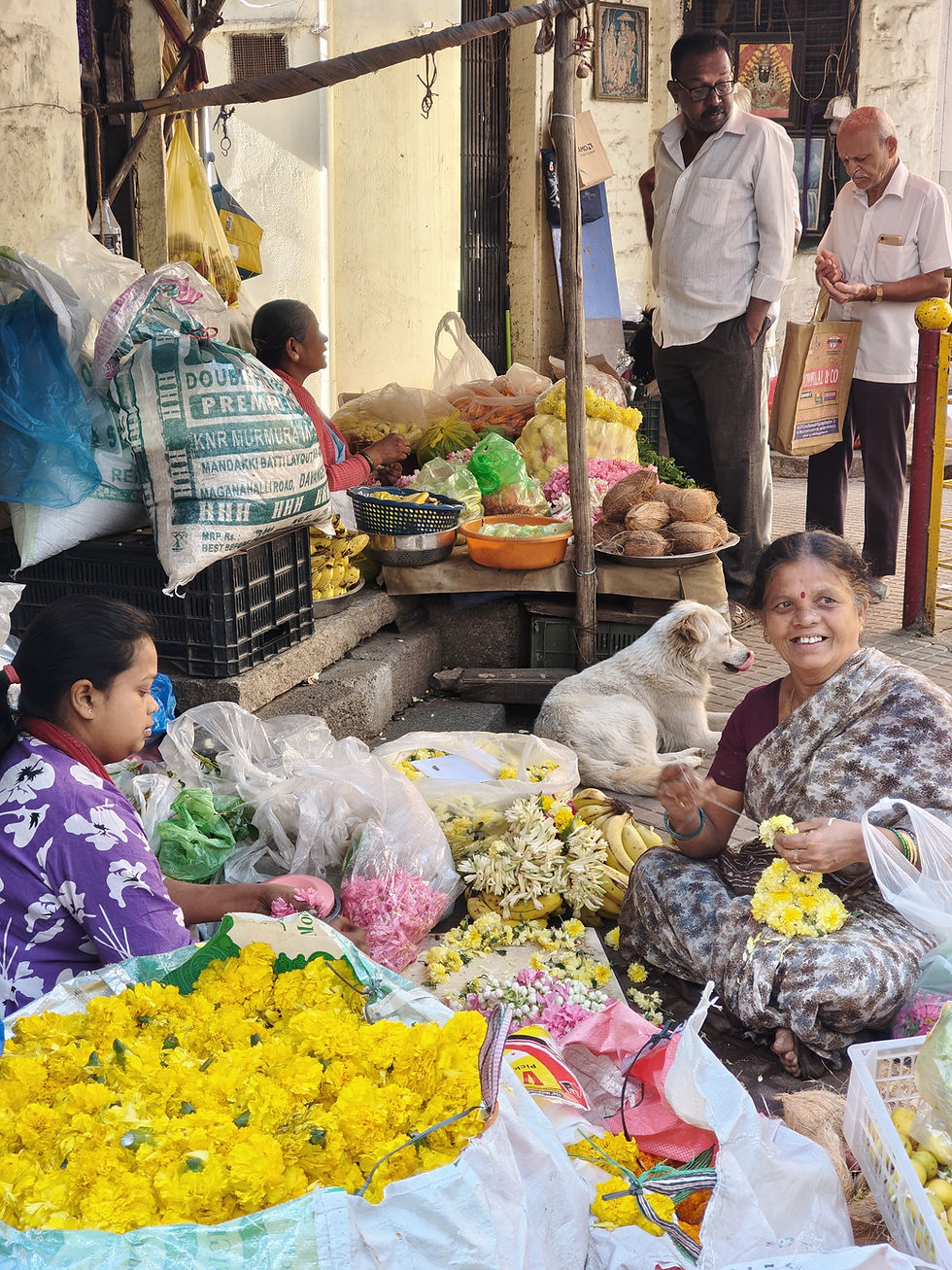
Street vendors are among the most visible yet most invisibilised workers in the city. They line pavements, hover at traffic signals, and set up fragile stalls at the edges of markets that were never designed for them. Their labour sustains urban life feeding commuters, supplying affordable goods, and animating public spaces yet their existence remains perpetually precarious. For old vendors, immigrant vendors, and disabled vendors especially, the street is not merely a workplace but a site of constant vulnerability, surveillance, and exclusion.
Older street vendors often continue working not by choice, but by necessity. With no pensions, no social security, and limited access to formal employment, age does not bring rest but increased risk. Their bodies struggle against long hours, harsh weather, and physical strain, yet the city offers no accommodation for their slowing pace. They are among the first to be evicted during “clean-up drives,” their age read not as a marker of dignity but as dispensability. The city’s demand for efficiency leaves no space for bodies that move slowly.
Immigrant vendors many from rural regions or neighbouring states face a different but equally harsh marginalisation. Without local identity documents, political connections, or linguistic familiarity, they are hyper-visible as outsiders. They are more frequently harassed, fined, or displaced, their right to occupy space constantly questioned. Informality renders them legally fragile: present everywhere, yet recognised nowhere. Their labour fuels the city’s economy, but they remain excluded from its protections, forced to negotiate survival daily through bribes, silence, and compliance.
Disabled street vendors confront layered exclusions. The street is hostile terrain uneven pavements, traffic, and public hostility amplify their vulnerability. Yet disability rarely translates into empathy within urban governance. Instead, it becomes another reason for scrutiny. Their bodies are policed as “obstructions,” their stalls framed as inconveniences rather than livelihoods. There is no safety net if they fall ill, no compensation if they are injured, and no institutional recognition of their right to work with dignity.
Across all these groups, surveillance is constant. Municipal authorities, police, resident welfare associations, and private security forces monitor vendors relentlessly. Evictions arrive without warning. Goods are confiscated. Violence verbal and physical is normalised. Vendors work under the shadow of larger markets and corporate retail, which are protected, licensed, and legitimised by the state. These formal markets do not merely compete with street vendors; they cast a long shadow that renders informal labour illegitimate by default.
Yet despite this structural violence, street vendors persist. Their resilience is not romantic; it is born of necessity. Every day they reclaim space in a city that refuses to fully acknowledge them. Their presence challenges dominant ideas of who the city is for and whose labour counts. To recognise their struggles is to confront uncomfortable truths about urban inequality, governance, and dignity. A city that fails its most vulnerable workers ultimately reveals its moral limits, not theirs.


Comments